
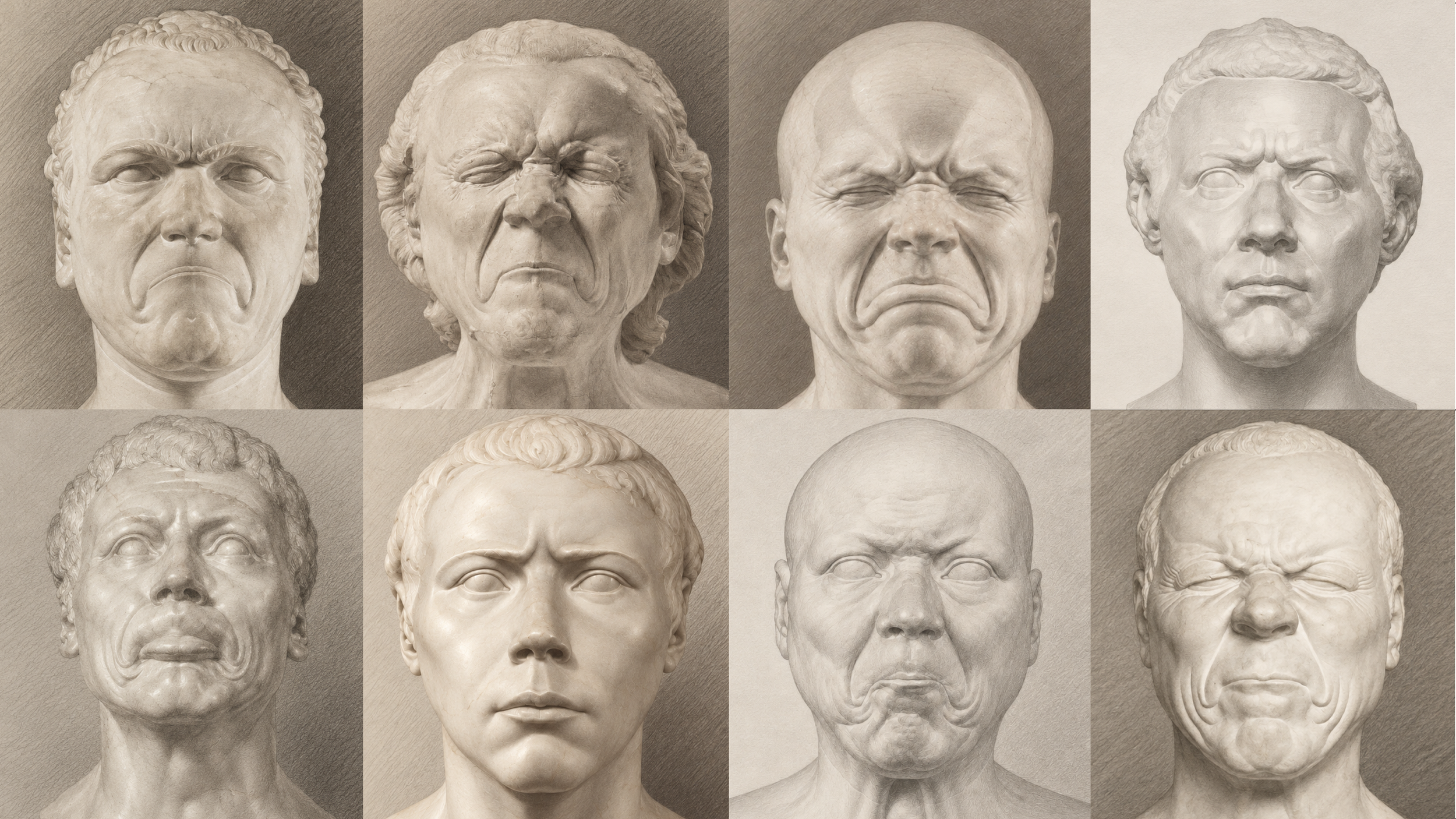
Image: Illustration after Character Heads by Franz Xaver Messerschmidt
Many people describe having a resting facial expression that appears consistently negative. In popular culture, this is often called “resting bitch face.” The expression is discussed as though it were an unalterable or fixed quality - almost like being born under a particular zodiac sign, such as Sagittarius. Can anything be done about a negative resting facial expression?
Have you noticed “resting bitch face” or “resting sad face” when you are not actively engaged in conversation or when you are deep in thought?
When did you first detect this quality in your own face? At what age or during what period of your life?
What factors might contribute to a negative passive facial expression, sometimes called RBF?
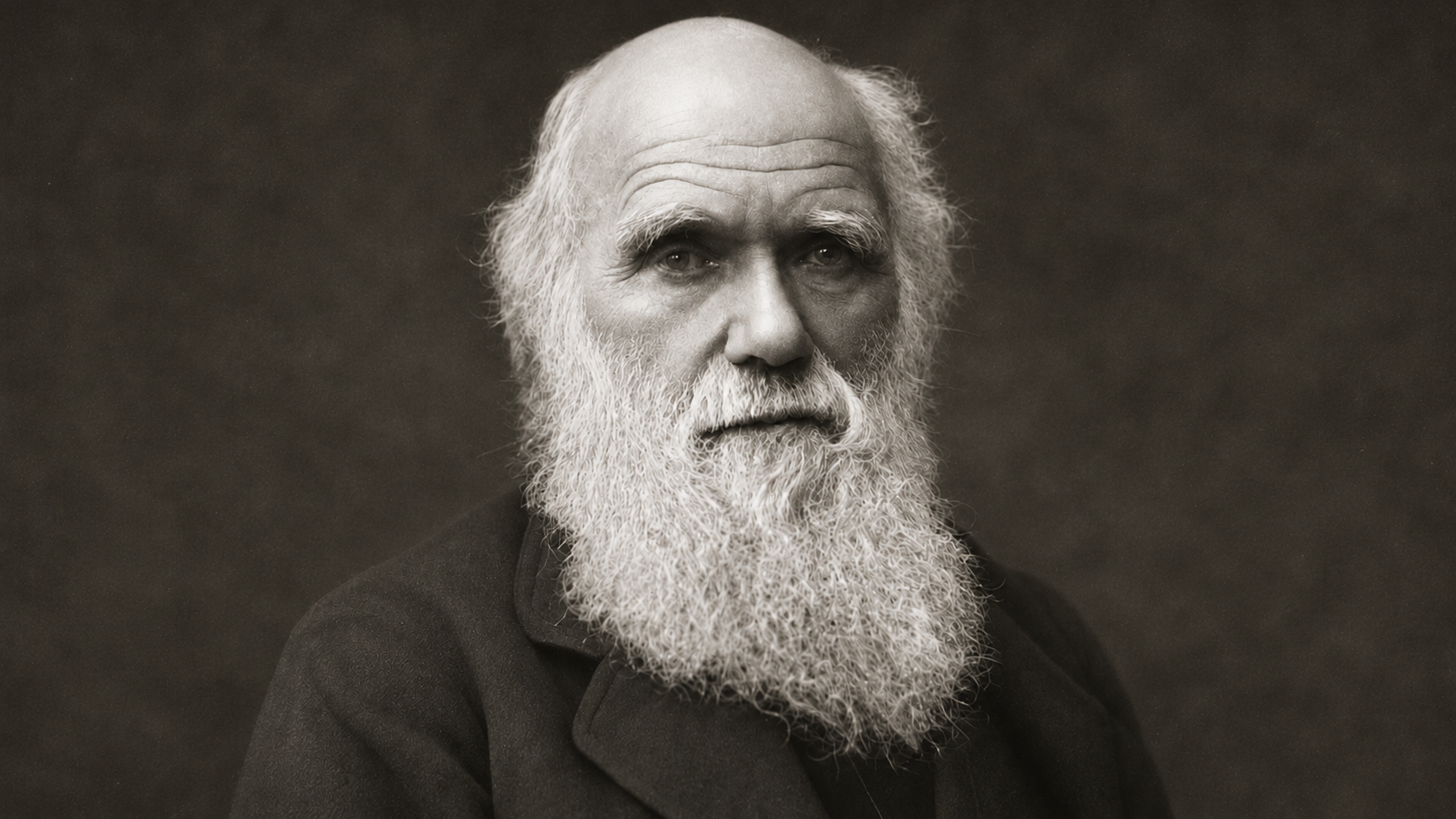
Image: Portrait of Charles Darwin
HISTORICAL AND CONTEMPORARY PERSPECTIVES
In the historical study of expression, pathognomy examines the relationship between emotional or mental states and their outward expression. In 1872, Charles Darwin described involuntary facial and bodily movements associated with emotion in The Expression of the Emotions in Man and Animals.
Darwin describes habit as a powerful force that enables complex facial movements to be performed with ease and without conscious effort. An analogy offered here is piano performance: practice makes complex movements fluent.
Conversely, Darwin notes that movements which have not been practiced may be difficult or impossible to perform. To illustrate this point, bending over to touch one’s toes can serve as an example.
Moreover, habit creates coherence in humans and animals. It acts as a mental shortcut, linking muscular movement, sensation, and feeling, and allowing activity to become more synchronized and reflexive.
Contemporary research uses facial EMG to measure subtle facial muscle activity. Researchers describe rumination - repetitive dwelling on negative thoughts - as a maladaptive response to negative mood. In one study, participants asked to ruminate showed increased activity in their lip and forehead muscles compared with their relaxed baseline. A later study also found greater forehead activity during rumination than during distraction or rest. These findings support a connection between negative thought and subtle facial muscle activity. Nalborczyk et al., 2017, full text; Moffatt et al., 2020
In addition to the role of habit in unconscious muscle movement, the amygdala - a structure in the brain’s limbic system - plays an important role in emotional responses and in learning and memory associated with emotionally significant experiences, including trauma and other stressors, whether physical or psychological. McDonald & Mott, 2017, and, amygdala-related emotional responses can occur without conscious awareness. Diano et al., 2017
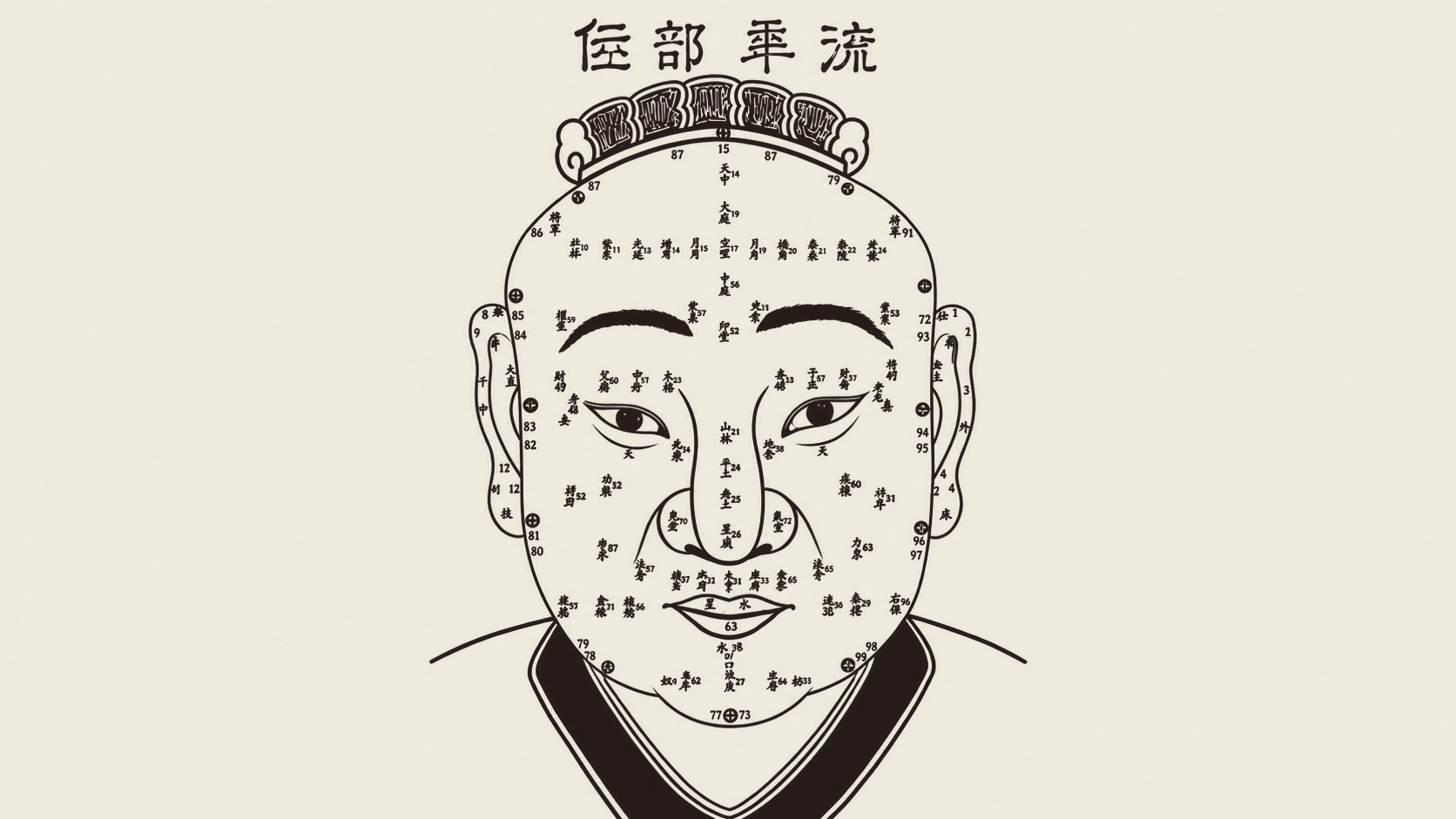
Image: Traditional Chinese Medicine facial diagnosis chart
traditional facial diagnosis
Traditional Chinese medicine includes forms of facial diagnosis that interpret facial features and complexion in relation to a person’s constitution and health. Within this framework, the face is regarded as a record of a person’s responses to past experiences and of how much jing (energy) they have expended during these events. Practitioners then use this “facial map” to guide their assessment of the person’s present physical and emotional condition.
Within traditional Chinese face reading - an ancient art based on empirical observation and transmitted through oral teachings - facial physiognomy refers to the basic structure of the head and its major features, which are understood to influence a person’s overall character. Facial expression, by contrast, is viewed as shaping the face over time. According to Lillian Bridges in Face Reading in Chinese Medicine, facial features are understood to be primarily genetic from birth through age twenty-five; thereafter, emotion and repeated expressions are understood to contribute to changes in these features.
This perspective strongly suggests that changing habitual mental and emotional states may also transform habitual muscle activity and, over time, aspects of facial expression. A negative resting expression, or RBF, may therefore be modifiable rather than fixed - and may be altered by transforming habitual negative mental and emotional states.
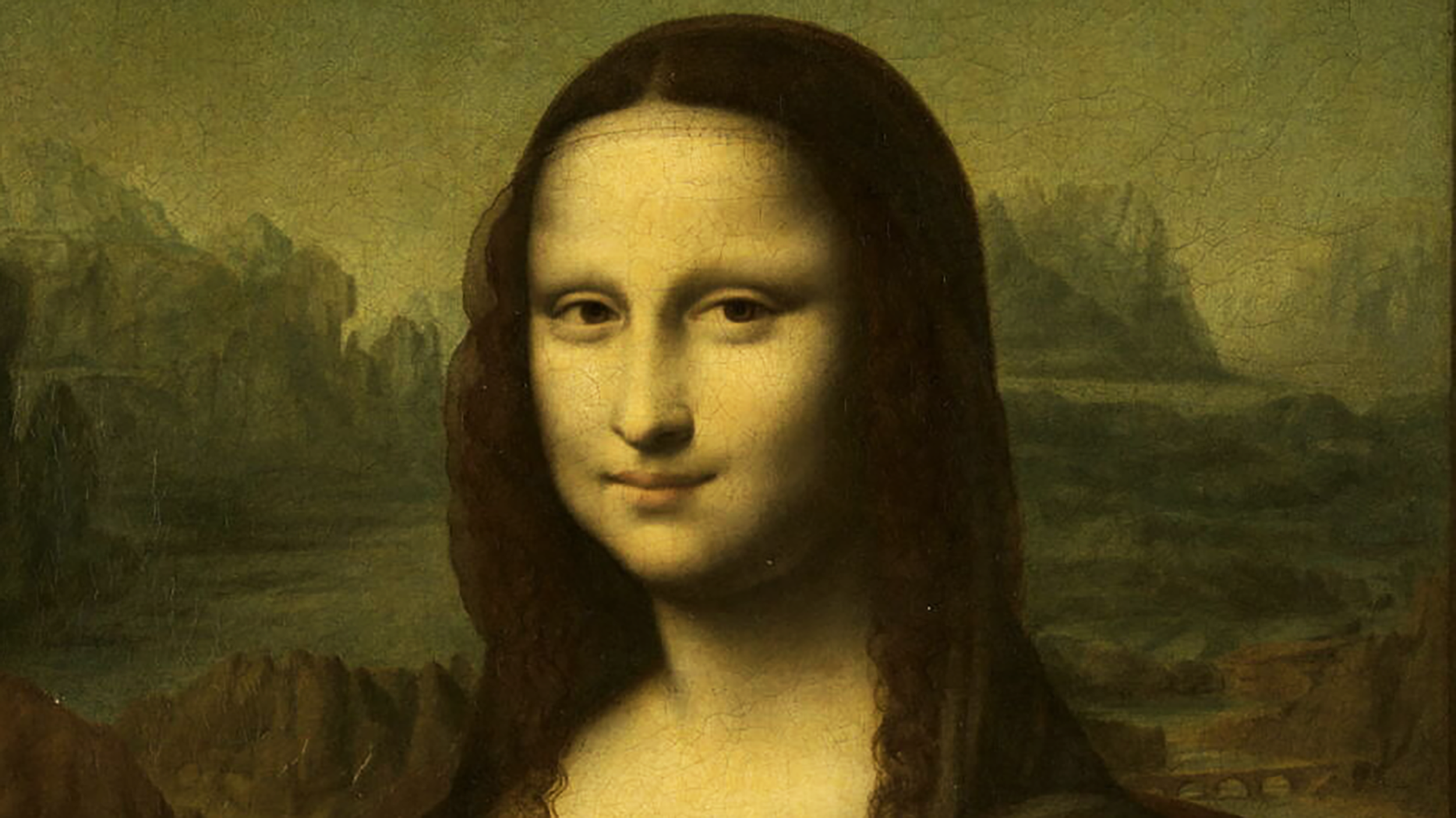
Image: detail of “La Joconde” the French title “the smiling one” of the Mona Lisa - Leonardo da Vinci
PRACTICES FOR CHANGING HABITUAL PATTERNS
The next section explores practices for transforming habitual negative mental and emotional states that affect facial muscle activity, as well as approaches intended to release trauma and stress-related responses involving the amygdala.
Meditation
Research on rumination and facial EMG combines direct measurements of muscle activity with participants’ reports of their inner dialogue. However, reporting requires participants to notice and describe their thoughts, bringing them into awareness in a way that may not occur in everyday life. Most negative and maladaptive inner dialogue may go unnoticed, allowing these thoughts to continue in a negative loop. Meditation practice teaches that conscious awareness is the first step toward releasing unwanted patterns.
When people are new to meditation, they may spend long stretches unaware that their attention has wandered from its intended focus, noticing only later that their thoughts have drifted. Through practice, meditators can develop greater awareness of their thoughts and become more alert to when their minds wander.
Exercise
Yoga is traditionally practiced with long, smooth breathing to train the autonomic nervous system to support calm responses to stressful or unpleasant situations. This training uses long, sustained respiration - natural to the body during positive mental activity - to counter automatic stress responses associated with shallow respiration.
Stretching and physical exertion are also known to influence endocrine and autonomic activity. Paired with these, yogic breathing activates the same tendency toward coherence that Darwin wrote about, eliciting more peaceful responses associated with longer, sustained respiration. This combined practice is designed to train individuals to maintain tranquility beyond the physical discomforts experienced on the mat.
Correct execution also involves maintaining a soft, neutral facial expression. Other forms of exercise can also be effective when performed with these primary foci - the yogic qualities of maintaining smooth, deep respiration and placid facial expressions - thereby training both the face and body to remain serenely resolute and equanimous through unpleasant circumstances.
Energy Healing
Reiki is an energy-healing modality that can assist in releasing anxiety and physical and emotional trauma held within the body’s cellular memory. Historical sources trace Reiki’s emergence in Japan to Mikao Usui, a monastic devotee, around 1922. The King Salomon lineage is an ancient wisdom and energy-healing tradition held by the Modern Mystery School and dating back more than three thousand years. It uses the same healing energy through more advanced protocols. Full Spirit Activation and Etheric Reconstruction are two energy-healing protocols within the lineage that are considered particularly effective in facilitating the release of physical or emotional trauma and stressors associated with emotional memories and responses within the amygdala and interconnected brain regions involved in emotional memory and stress responses.
Moreover, Full Spirit Activation is said to awaken the soul by activating the supernal energy system through the thalamus, pituitary gland, and pineal gland. Etheric Reconstruction similarly releases emotional memories and stress responses while further assisting recipients in shifting their relationship to the old story that keeps them caught in a self-fulfilling loop.
Empower Thyself
Empower Thyself offers a highly accelerated release of negative thought patterns through ancient energy-healing methods in the lineage of King Salomon, in a workshop format. The program uses a method similar to Socratic questioning to guide participants in examining their unconscious beliefs, many of which are connected to negative thoughts and anxiety-driven coping mechanisms. The workshop also provides ancient tools for actively instilling positivity, releasing and redirecting negative energy, and focusing personal energy toward manifestation. The workshop concludes with an initiation into the lineage that anchors high-frequency light energy in the participant’s energetic structure, elevating their overall energetic state.